The Launch of the Adaptation and Resilience Impact Measurement Toolkit
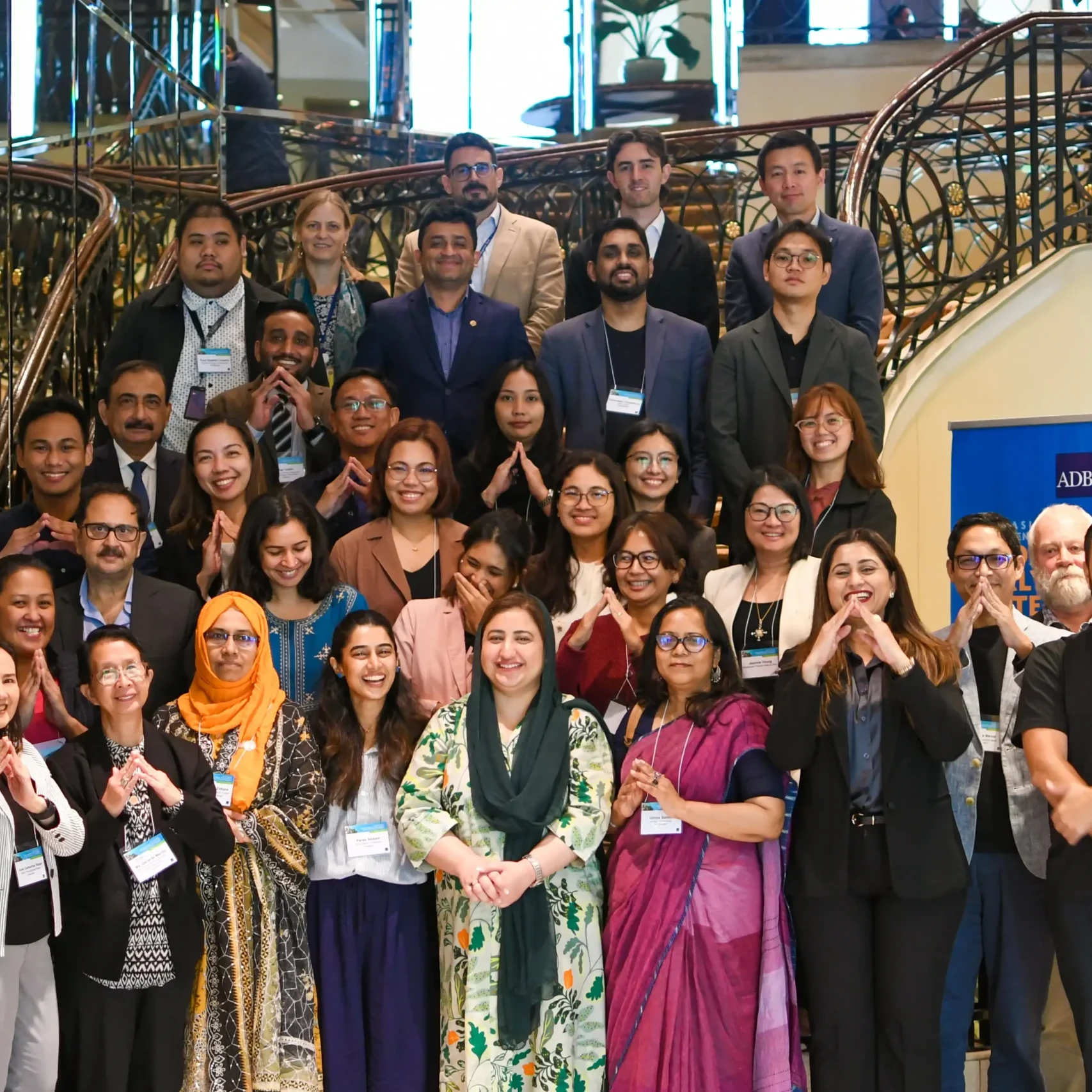
Over the past year, Cadlas has worked closely with UNEP FI under the Climate Adaptation Innovation and Learning (CAIL) project’s Community of Practice on Climate Change Adaptation Impact Measurement and Information Flows (CoP4), exploring how information about climate adaptation and resilience (A&R) can be used by financial institutions.
An important message emerged from the extensive consultations with the broad range of financial institutions that make up CoP4: making the business case for scaling adaptation finance is more difficult when financial institutions cannot reliably measure or demonstrate the A&R impact of their financing activities.
When the benefits of A&R investments are not visible or verifiable, institutions struggle to build credible business cases for allocating capital to A&R. As a result, climate-vulnerable communities and sectors often remain unable to access the resources they need. Without systematic measurement, it is also harder to identify which interventions genuinely build resilience and which do not.
This Toolkit addresses this gap by providing a structured approach for assessing, tracking and communicating A&R impact. In response to this clearly identified need, over 2025 a collaborative effort between Cadlas, UNEP-FI and the CoP4 members has culminated in the development of the Adaptation and Resilience Impact Measurement Toolkit
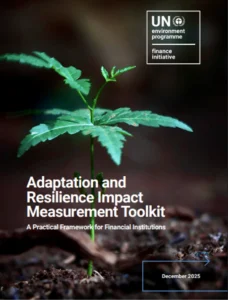
Cadlas is proud to have contributed the technical inputs that shaped this Toolkit.
Drawing on our expertise in A&R impact measurement, we have helped to ensure that the Toolkit provides practical, decision-useful guidance that supports financial institutions in generating credible evidence of A&R outcomes and in integrating physical climate risk into financing strategies.
This forms an important part of our broader work here at Cadlas to help financial institutions embed A&R into their operations, pursue the opportunities associated with A&R as an emerging investment them, and scale up urgently needed finance for A&R.
The Measurement Challenge
As Cadlas has observed through our work with our financial sector clients, partners and stakeholders, A&R can be challenging for financial institutions to measure. A&R benefits can vary significantly across geographies, sectors and communities. Data in climate-vulnerable regions is sometimes limited, and it can often be difficult to establish counterfactuals against which A&R impact can be measured. Many A&R benefits unfold slowly, sometimes over decades, while financial institutions typically operate on much shorter investment and reporting cycles.
Together, these factors create an A&R measurement gap that constrains capital flows and contributes to the persistent under-valuing and under-scaling of A&R finance, even as climate impacts intensify. The Toolkit does not aim to eliminate these challenges entirely, but provides a practical framework that enables institutions to generate credible evidence of A&R benefits that is proportionate to their capabilities and decision needs.
The Toolkit is intended for to be used by a broad range of financial institutions including commercial banks, development finance institutions, insurers and reinsurers, and asset managers. It recognises that each institution type has different motivations, operational models and financial decision-making frameworks. To reflect these differences, the Toolkit includes institution-specific guidance that aligns measurement approaches with each organisation’s objectives and complements existing frameworks, enabling institutions to build on what they already use while filling gaps where more structure or clarity is needed.
A Clear Impact Pathway
At the heart of the Toolkit is the A&R impact pathway, linking financial inputs to outputs, outcomes and longer-term impacts

By concentrating on the stages where measurement is most feasible and reliable, the Toolkit helps institutions make the value of their adaptation and resilience activities more visible and more comparable.
It also draws on the logic of the UNEP FI Portfolio Impact Analysis Tool and introduces two complementary types of indicators, enabling organisations to track both their internal progress and the real-world A&R impact of their financing:
- Results indicators capture real-world A&R improvements delivered by financed activities
- Practice indicators reflect the internal processes, systems and capabilities that enable institutions to drive those results.
The Toolkit aims to provide an interactive starting point for financial institutions to begin generating and using these different indicator types as meaningful decision metrics across a range of financing activities and sectors.
Cadlas Senior Specialist and co-author of the toolkit, Noah Wescombe, notes the value of this approach:
What makes this toolkit uniquely useful to financial institutions is that it not only draws on diverse consultation from across the UNEPFI membership and its CAIL network but also provides a progressive approach to A&R measurement with multiple entry-points for organisations at different stages in their resilience journey.
Looking Ahead
While A&R measurement will always involve a degree of complexity, the Adaptation and Resilience Impact Measurement Toolkit offers a grounded and practical way forward. It supports institutions in identifying where physical climate risk matters most in their portfolios, what can be realistically measured and how this information can inform meaningful action.
The need for scaled up A&R financing is growing rapidly as climate impacts intensify and regulatory requirements increase. Financial institutions that strengthen their A&R measurement practices today will be better positioned tomorrow to scale responsibly, attract capital, manage risks and demonstrate genuine impact.
Cadlas looks forward to supporting our financial sector clients and wider stakeholders and partners to adopt and apply this toolkit, and to embed A&R measurement approaches and capabilities into their business practices and investment strategies.